For many caregivers, the timing made it even more worrying. With the NORAD project coming in to support livelihood activities, people were preparing to invest more into their farms. But without a solution, there was a real risk that their efforts could be lost.
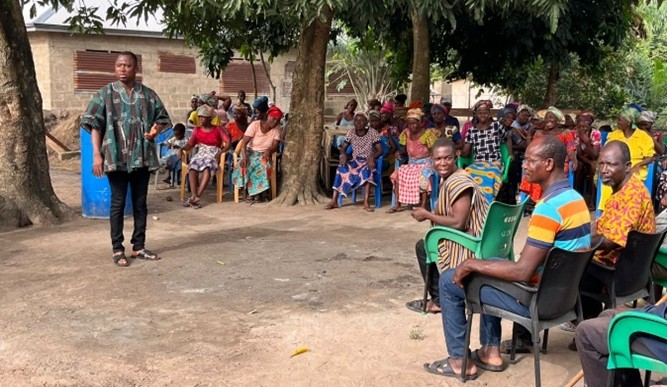
Because of this, Friends of Adaklu (FOA) worked with the Adaklu District Chief Executive to organize a community dialogue. The meeting brought together chiefs, elders, youth, community members, and leaders from the Fulani community, including herdsmen.
During the meeting, farmers spoke openly about how the cattle were destroying their crops and livelihoods. For them, farming is not just a source of income; it is what supports their families and keeps their children in school.
Fulani leaders and herdsmen also shared their side and showed willingness to work with the community to prevent the problem from continuing. Traditional leaders stressed the need for everyone to respect farm boundaries and protect the hard work of farmers.
The District Chief Executive, Hon. Jerry Yaw Ameko, who led the meeting, encouraged both sides to continue engaging through dialogue and cooperation to avoid conflict and maintain peace in the community. A 9-member committee was formed, including members from the Youth Group, Elders, women’s Group, and the Fulani community, to ensure accountability.
The discussion helped both sides better understand each other and agree on the need to protect farmlands moving forward. This is especially important as caregivers prepare to benefit from the farming support under the NORAD project.
Friends of Adaklu will continue to work with the District Assembly and community leaders to support practical, sustainable solutions that protect livelihoods and ensure families can provide for their children.