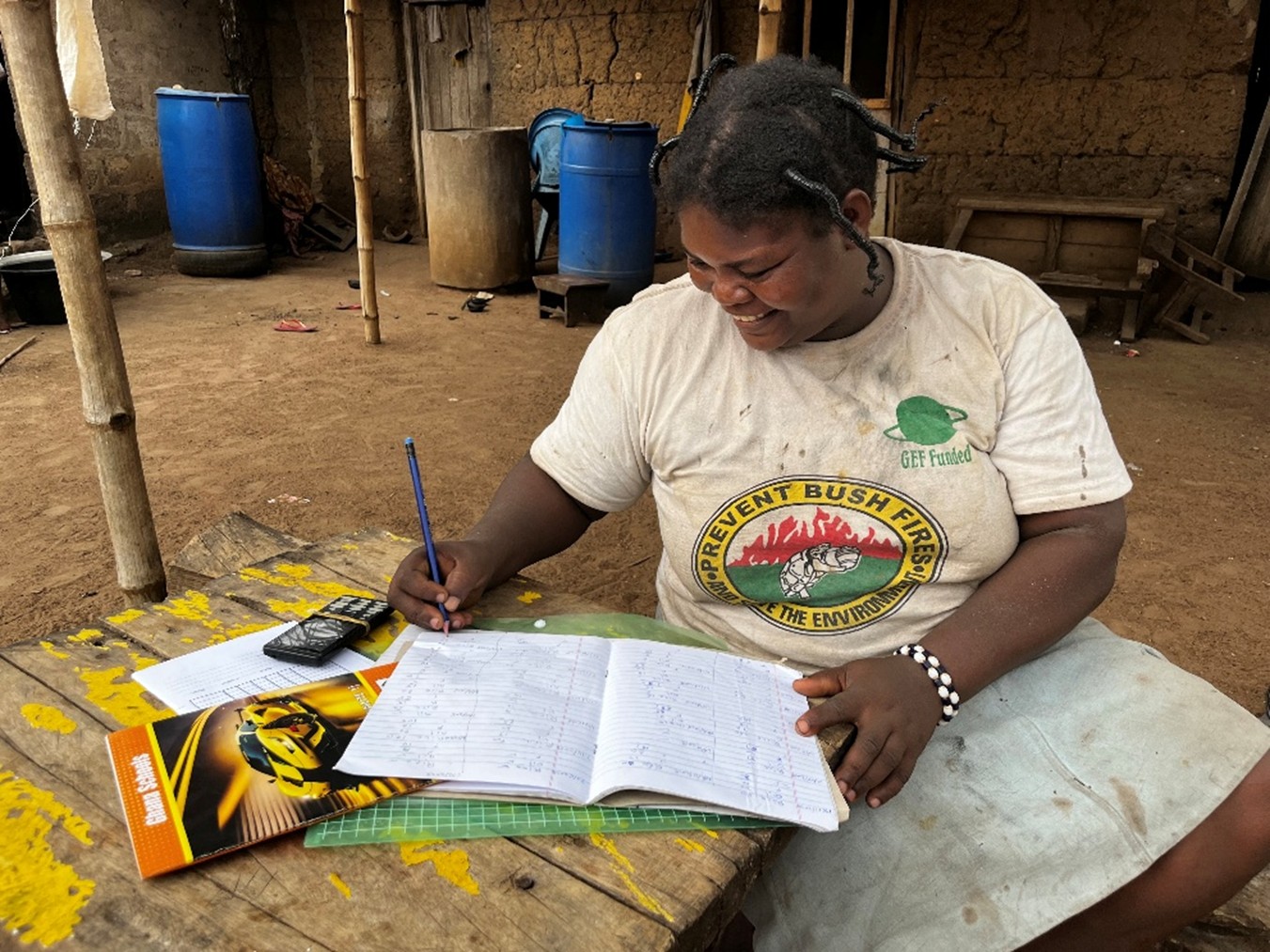
Before joining the NORAD-supported project, Faustine did not keep written records. Like many caregivers, she relied on her memory, which made it difficult to recall and clearly understand how her business was performing.
Through the project’s training, she learned the importance of recording both daily sales and expenses as well as domestic expenses. Today, she consistently writes down what she sells and what she spends. According to Faustine, this practice has made a significant difference.
She now understands how much goes into her business, what she earns, and the profit she makes. This has helped her plan better and manage her money more carefully. Keeping track of her daily expenses has also helped her reduce unnecessary domestic spending and stay focused on growing her business.
Faustine’s experience shows how a simple habit like record-keeping can improve financial management. With the right support and knowledge, caregivers are better able to strengthen their livelihoods and provide more stability for their families.